
OPPRESSIONISM
The Ideology That Reshaped Liberalism from Within
Does nothing make sense anymore? Does society feel increasingly divided?
The language of politics no longer fits the battles we are fighting. What used to be debate between left and right has given way to moral warfare over identity and belief. Cancel culture, “Wokeism,” and the gender debates are not isolated culture wars but signs of a single ideology called Oppressionism. Heir to Communism, it has shifted its focus from class to identity. It divides society into oppressors and oppressed and rewrites justice around identity.
This site traces its origins, explains how it works, and maps its reach across culture, institutions, and law.
In association with
The Duopolist
The Duopolist
Oppressionism In The News
View recently added media cards. Read the original source or view the case study.

MP's school visit cancelled due to pro-Palestinian protests

Adelaide Festival Cancels Writers' Week After Disinviting Palestinian Author

The Prevent video game that treats every teenager like a far-Right extremist

UAE Removes UK from Scholarship List Over Radicalization Fears

Inside the Women's Prison Where Violent Male Inmates Have Their Way

Police defend ban on Maccabi Tel Aviv fans amid parliamentary scrutiny over biased intelligence

Minnesota Governor Walz Withdraws Amidst $9 Billion Fraud Scandal
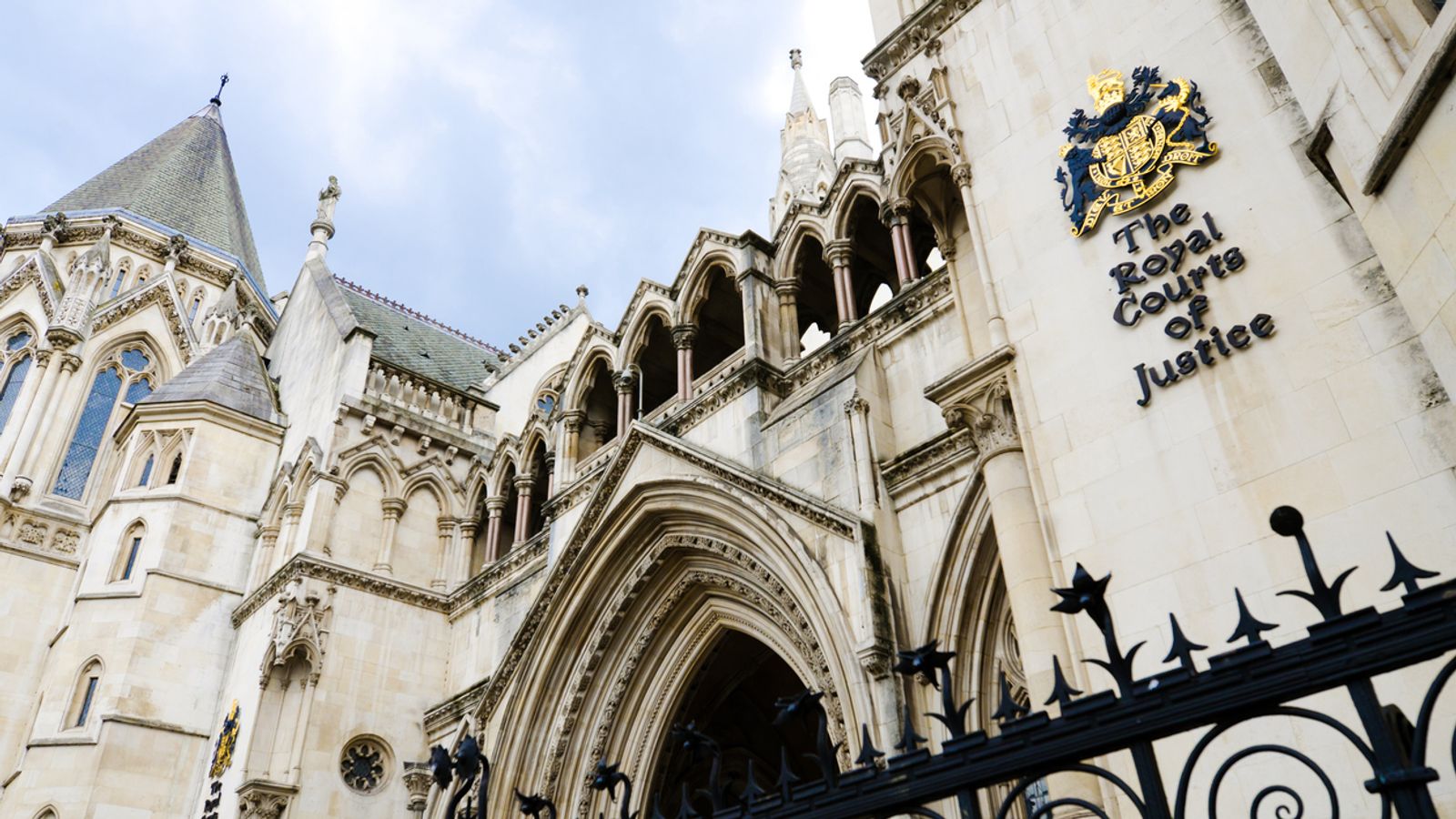
Double murderer awarded compensation over human rights breaches

British-Egyptian man released from prison in Egypt made violent and offensive remarks in social media posts
The Basics
A clear, three-part introduction to Oppressionism.
The Origins of Oppressionism
How a post–Cold War ideology emerged from the collapse of communism and the transformation of liberal democracy.
Read moreThe Nature of Oppressionism
How Oppressionism operates as a system that redefines justice, freedom, and power from within liberal society.
Read moreThe Logic of Oppressionism
The blueprint that defines Oppressionism as a self-reinforcing ideology rooted in power, identity, and perpetual correction.
Read moreCore Beliefs
Beliefs at a glance. Hover a card to see a one-line summary.
Societal Binary
The foundational premise that all of society is reducible to a fixed binary of oppressors and oppressed.
In this binary, one side is always right and the other always wrong, so the world is read as a constant battle between oppressors and the oppressed, and every aspect of society is judged through that divide.
Primacy of Power
Power holds the binary in place, working systemically and invisibly through laws, norms and language.
Once adopted, it teaches that every relationship hides a structure of domination, and that truly understanding the world means uncovering how power shapes institutions, identities and everyday encounters.
Identity as the Map
Group identity serves as the map of power, fixing each person’s moral standing and place in the social order.
The ideology treats identity as essential and inescapable. Markers like race, gender, sexuality and religion place each person on a moral grid, shaping who is believed, distrusted, presumed guilty or entitled to speak.
Compulsory Alignment
Neutrality is rejected as an illusion that protects dominant interests, making inaction a moral failure.
Institutions must abandon procedural fairness and become activist, compelling both organizations and individuals to adopt ideological consensus as a moral obligation and condition of legitimacy.
Epistemic Inversion
Knowledge and authority arise from identity and experience rather than universal reason or evidence.
Lived experience is treated as self-validating knowledge. The views of oppressed groups are taken to trump “objective” or universal claims, inverting the Enlightenment ideal that truth is neutral and value-free.
Privilege & Guilt
Privilege is unearned advantage and inherited moral guilt, imposing a moral responsibility to act.
Dominant groups must actively counter their advantages by ceding opportunity and treating meritocracy as inseparable from unearned benefits and the pursuit of equity of outcome.
Justice as Reversal
The primary goal of justice, and by extension the law, is to correct and reverse group advantage.
The law is not a neutral referee applying the same rules to everyone. Instead, penalties, protections and opportunities are adjusted by group identity in order to “balance the scales” of history.
Intersectionality
Overlapping disadvantages increase moral authority, creating a ranking of whose claims matter most.
This concept establishes a moral ranking based on cumulative disadvantage, casting people with the most stacked disadvantages as the most qualified to lead and interpret injustice.
Liguistic Coercion
Language is treated as a tool of control; words and symbols are instruments of power.
This principle justifies strict control over speech and expression. Approved terms and narratives are enforced, while dissenting speech is framed as harm or oppression that must be corrected.
The Three Pillars
The three pillars that allow Oppressionism to operate as a leader-less, self-reinforcing ideology.
The Operating System
How Oppressionism functions through an internalized code that shapes perception, judgment, and behavior across society.
Read moreThe Playbook
The recurring script through which Oppressionism converts moral logic into coordinated social and institutional action.
Read moreThe Hive
The decentralized network that enforces conformity and amplifies Oppressionism’s influence across institutions and culture.
Read moreTactics & Tools
Tactics and tools at a glance. Hover a card to see a one-line summary.
Activist Pressure Campaign
Coordinated campaigns that mobilize public attention and social pressure to force institutions to adopt, enforce, or reverse specific decisions.
Deplatforming / Censorship
Restricting access to venues, infrastructure, or audiences in order to silence or marginalize dissenting voices in the name of safety.
Disciplinary Enforcement
Using internal procedures and grievance mechanisms (HR, conduct codes, bias teams) to punish or deter deviation from institutional ideology.
Ideological Prefiltering
Designing admissions, hiring, grant, or publication filters that screen for ideological alignment before merit is assessed.
Loyalty or Values Declaration
Requiring explicit statements, gestures, or rituals that publicly affirm allegiance to the institution's moral framework.
Policy Reengineering
Rewriting institutional and public policies so that neutral language hides outcome rules aligned with an oppressor versus oppressed worldview.
Quota / Set-Aside Mechanism
Allocating roles, resources, or prestige by identity category or group status to engineer desired distributions and optics.
Retroactive Rule Change
Applying newly defined moral or ideological standards to past speech or conduct and punishing people by those updated rules.
Ritualized Apology or Confession
Staged public apology or confession rituals where the accused admits wrongdoing, endorses the ideology, and accepts penalties to regain partial acceptance.
Safety-Based Cancellation
Canceling events, roles, or relationships on the grounds that a person's presence, views, or history pose emotional or psychological harm.
Strategic Litigation
Using courts, tribunals, and regulatory bodies to create legal precedents that embed identity weighted interpretations of rights and obligations.
Symbolic or Personnel Removal
Removing people, statues, names, curricula, or branding that conflict with the ideology to signal moral renewal and set new boundaries.
Stay connected
Oppressionism is an ongoing project. New cases, flashpoints and chapters are added over time.
Read the Substack
Free and extended chapters from The Return of the Duopoly and essays that develop the Oppressionism framework. Visit The Duopolist →
Follow on X
Short takes, live reactions to new flashpoints, and threads linking real cases back to the core beliefs and tactics. @Oppressionism_ →
Explore The Duopolist
The wider project that sets Oppressionism inside the new duopoly between liberal democracy and resurgent Authoritarianism. theduopolist.com →
Flashpoints
Real-world cases that illustrate Oppressionism in action.
Asymmetric Moral Standards
Institutions applying conduct and speech codes selectively based on group power dynamics, permitting offense against groups perceived as dominant while strictly punishing similar behavior toward those classified as marginalized.
Capture of Global Institutions
The transformation of international bodies into tribunals of selective memory that prioritize historical guilt over universal standards, casting Western democracies as permanent oppressors while shielding authoritarian regimes from scrutiny.
Corporate Ideological Compliance
Mandatory training and governance frameworks that condition employment on affirming specific ideological commitments regarding privilege, bias, and equity, transforming the workplace into a site of moral enforcement.
Cultural Purity Enforcement
Accusations that actors, designers, chefs, or influencers are 'stealing' from a culture when they use its style, stories, or symbols, often leading to roles recast, shows pulled, campaigns canceled, or products withdrawn.
Erosion Of National Sovereignty
Reframing of national sovereignty, including border control and national identity, as morally wrong, advancing open borders as an ethical imperative and treating national symbols as markers of exclusion with dissent burshed off as bigoted.
Fairness vs Inclusion in Women's Sport
Disputes over letting male-born athletes compete in women's categories, where Title IX and other rules are reinterpreted to prioritize gender-identity inclusion over competitive fairness and safety for female athletes.
Forced Speech
Policies and rules that require people to use specific pronouns or approved terms in schools, workplaces, professional bodies, and public services, with refusal treated as harassment, discrimination, or misconduct.
Human Rights Turned Into Duties
Cases where human rights and equality laws are reinterpreted to prioritize identity-based vulnerability and subjective harm, and then used to force speech, override conscience, or compel policies that restrict liberty instead of protecting it.
Ideological Deplatforming
People losing platforms, invitations, or positions because their views clash with the dominant view, such as invited speakers being disinvited, employees fired after social media posts, or authors dropped by publishers or awards.
Loss of Sex-Based Safeguards
Conflicts over prisons, shelters, locker rooms, and other women-only spaces where gender identity rules override biological sex, allowing male-bodied people to enter spaces and services that were created to protect women and girls.
Perception-Based Policing
Cases where police time is pulled away from investigating real crime and toward managing feelings and reputation, such as officers visiting people over social media posts or running symbolic campaigns instead of patrols.
Politics Before Profit
Where companies put showing moral or political alignment ahead of serving customers or protecting the bottom line, for example dropping profitable products after campaigns, or tying executive bonuses to hitting DEI or ESG targets.
Rewriting History and Knowledge
The expansion of decolonization from a political project into an epistemic one, demanding the restructuring of curricula, museums, and historical narratives to center 'colonial guilt' and dismantle Western intellectual dominance.
Speech as Harm
When institutions punish speech as if it were harm, for example students investigated over emails, staff sent to mandatory training after complaints, or police logging 'non-crime hate incidents' because someone felt offended.
State Versus Parents
Conflicts where schools or clinics use identity, diversity, or 'safety' policies to override parents in major decisions about a child's name, pronouns, schooling, patriotism, beliefs, or medical treatment, steadily eroding parental authority and consent.
Structural Justice Reorientation
The formal shift in justice policy that treats reducing statistical disparities between groups (equity) as a higher goal than neutral crime reduction, for example through non-prosecution of low-level offences or bail reforms that raise known risks.
Tech Gatekeeping and AI Bias
Embedding ideological objectives into digital infrastructure, where search algorithms, moderation rules, and AI models are engineered to prioritize 'safety' and 'harm reduction' over neutrality, actively surfacing approved narratives.
Uneven Justice
Distortion of justice by police, courts, and social services when identity-based narratives about race, gender, or migration shape decisions from investigation to sentencing, leading to downplayed offences, ignored warnings, or suppressed information.